Enterprise resource planning (ERP) systems are software applications that serve as a single source of truth for business information and processes. ERP core features include financial management, supply chain management, and data analysis and reporting. Together, these core functions help businesses integrate data from disparate parts of the business into a central repository, helping improve visibility for managers and helping them track business performance, as well as helping automate processes. Together, these capabilities can help businesses streamline operations, manage their finances, reduce errors, and improve decision-making.
Let’s take a closer look at some typical features of an ERP:
Financial management
It won’t come as a surprise that one of the biggest considerations when purchasing ERP software is finance and accounting. ERP systems automate routine financial tasks, which means teams have fast and easy access to the data they need, whilst also allowing them to focus on strategic work, like risk analysis and forecasting.Financial management tasks usually handled by an ERP system include accounts payable and receivables, budgeting and forecasting, and reporting.
Accounting
One key benefit of using an ERP platform for accounting is that it can integrate with other parts of the business and can be important for storing, tracking, and analysing financial data. The accounting features in an ERP system are typically able to perform a range of tasks, such as cash management, general ledger, and financial reporting and analytics. Apparel wholesaler Simon De Winter Group has been able to save more than $100,000 per year in costs associated with outsourced accounting by switching to an ERP system. Leaders now use personalised dashboards to access real-time reports, rather than requesting files and analysis from the finance team.
Data analysis and reporting
ERP systems bring organisational data together in one place. This makes it easier to apply analysis and create reports from it. Most ERP systems provide a range of data analysis capabilities, such as data extraction and integration, trend and pattern identification, and predictive analytics. Reporting functions might include month-end or quarter-end close reporting, annual reporting, and operational reporting.
Tracking and visibility
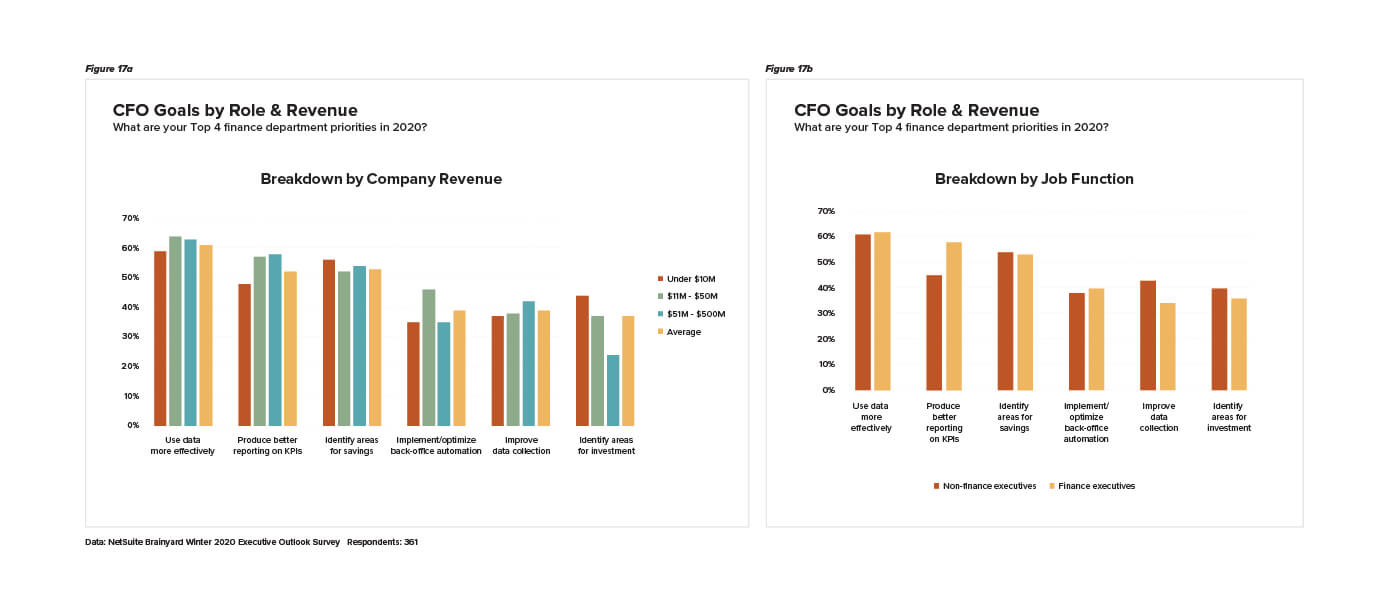
With an ERP system, companies can track, surface,and understand business metrics, whether it’s data like stock levels, production progress, or order fulfilment figures. This is particularly helpful with processes like inventory management, especially when trying to minimise overstocking or avoiding stock-outs.
Supply chain management
ERP systems can be used to look at a business's entire supply chain, from production status to order fulfilment. This can help leaders make decisions about more efficient distribution routes, processes that can be optimised, and where resources should be allocated. Sustainable packaging company BioPak was able to get rid of the manual spreadsheet transfers and supplier communications that had previously made order tracking complicated by switching to an ERP. Now, leaders at BioPak use clear, integrated dashboards to visualise their supply chain and centralise all vendor communications.
Manufacturing
Initially, ERP solutions were designed to help manage and integrate aspects of the manufacturing process, and they continue to do so. They help streamline the production cycle, manage distribution planning, and help coordinate assembly operations. ERP systems typically have the ability to tackle tasks like automating the planning of production runs and scheduling tasks, tracking and managing material flows, and helping oversee the supply chain.
After implementing an ERP at Extel Technologies, leadership teams were able to review performance daily. They then created production workgroups to identify root causes of issues, leading to a 20% increase in manufacturing efficiency.
Customer relationship management (CRM)
Integrated customer relationship management (CRM) tools provide an expanded business view and strengthen customer relationships, boosting satisfaction and loyalty. Without a CRM solution, teams can be left guessing about their customers and will find it challenging to share information across departments.
ERP systems with an integrated CRM solution can provide insights into customer behaviour and purchasing patterns, which can help marketing teams make data-driven decisions when building campaigns. The automation functionality is also helpful for lead management and sales forecasting.
Sales and marketing
Sales and marketing teams can benefit from an ERP system integrated with a CRM solution. For sales teams, this can help with lead management as well as quoting, ordering, and sales forecasting. Marketing teams can use it to manage customer data and for omnichannel marketing. This system can also be used collaboratively with operations and finance departments, to provide a good customer experience throughout the entire sales cycle.
Integration
Arguably, the most important benefit of an ERP solution is integration. The more integrated an ERP system is with other organisational systems, the better it serves as a central hub for process automation and real-time visibility across the business. The main benefits of an ERP integration strategy include improving efficiency and productivity while increasing data consistency and accuracy. It also provides greater scalability and encourages growth by delivering key insights.
Automation
An ERP system can be used to automate repetitive tasks, which is particularly useful for data consistency and accuracy. Such automation may extend to finance tasks such as payroll and tax management, inventory management tasks such as order allocation and stock tracking, sales functions such as quote management and order entry, and workforce management like employee onboarding or performance tracking.
CHOICE, Australia’s leading not-for-profit consumer advocacy group, saw subscriber retention improve by 3% after implementing an ERP. This was achieved by changing their billing process and automating email alerts to subscribers, highlighting the power of using an ERP across departments.
AI
Artificial intelligence (AI) is fast becoming a key feature of leading ERP systems, with the technology offering new ways to simplify tasks, uncover business insights, suggest actions, and power better, more informed decisions. The intelligent automation made possible by AI in ERP platforms can increase accuracy, speed up work, and free up teams for high-value activities. However, not all AI technologies are created equal. Choosing a vendor with the right AI strategy is critical to ensure the technology drives growth and long-term competitiveness.
Unlock your business potential with NetSuite’s ERP
NetSuite ERP helps organisations centralise data, automate complicated workflows, and provide real-time insights in one unified, AI-powered platform. By removing data silos and reducing manual errors, small and medium-sized businesses will have bandwidth to focus on strategic work. Learn how NetSuite ERP can give your business the competitive edge needed to drive growth.
ERP features FAQs
What is an ERP, and what are its features?
ERP stands for enterprise resource planning and usually comes in the form of a software system that helps to manage and integrate data across a business. Some of the features an ERP system may have include automation, data analysis, customer relationship management, manufacturing, supply chain management, accounting, and reporting.
What is a key feature of an ERP system?
One of the most important features of an ERP platform is its ability to integrate across various departments and systems within a business. The main benefit of this is the ability to see (and share) real-time data in reports that are easy to understand, acting as a single source of truth.
What are the three characteristics of an ERP?
ERP systems are defined by three key characteristics: they centralise business data and provide real-time visibility, they automate tasks across departments, and they integrate various parts of the business and the systems they are using.
What are the key functions of ERP?
Some of the key functions of an ERP solution are: financial management, supply chain operations, human resources, manufacturing, and data analytics. These platforms are useful for automating processes like invoices, employee management and production planning, and for providing real-time reporting.